
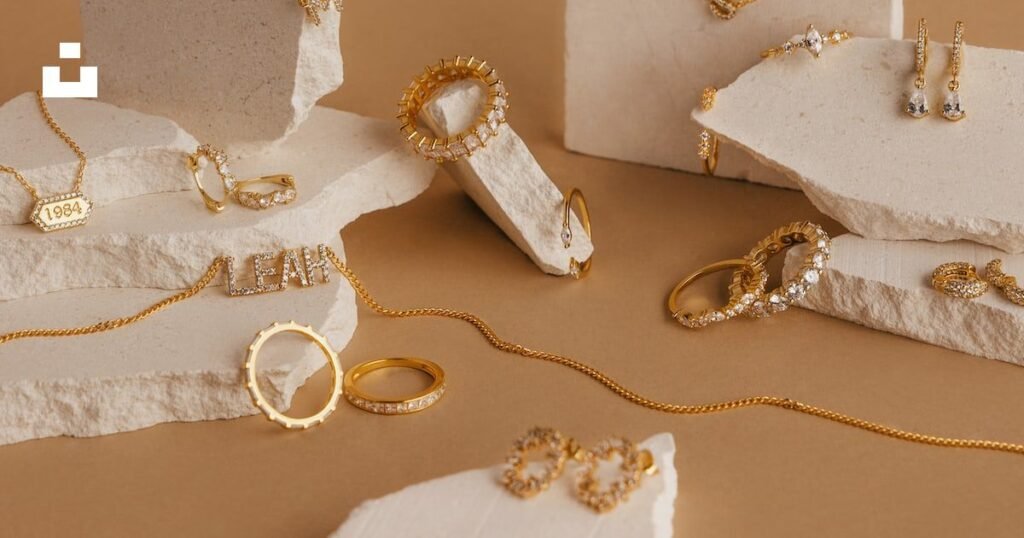
Anti-tarnish jewellery is designed to resist tarnishing and surface discolouration for longer than jewellery made without specific tarnish-resistant properties. However, “anti-tarnish”, “waterproof”, “corrosion-resistant”, and “hypoallergenic” do not mean the same thing. The actual durability of a jewellery piece depends on its metal, alloy, plating or coating, manufacturing quality, and exposure to moisture, sweat, chemicals, and humidity.
For everyday wear, corrosion-resistant materials such as stainless steel, particularly 316L stainless steel, can offer good resistance to tarnishing, while plated jewellery may require more care as its outer coating can eventually wear.
What Is Anti-Tarnish Jewellery?
Anti-tarnish jewellery is jewellery designed or treated to reduce the likelihood or speed of tarnishing, discolouration, and surface oxidation.
“Anti-tarnish” does not describe one particular metal. Jewellery can have tarnish-resistant properties because of:
- The metal or alloy used
- A protective coating
- PVD coating technology
- Plating
- The jewellery’s surface finish
- A combination of material and protective treatments
This means two pieces advertised as “anti-tarnish jewellery” can have very different levels of durability.
What Does Anti-Tarnish Mean in Jewellery?
In simple terms, anti-tarnish means the jewellery is designed to resist visible deterioration of its surface for longer under normal conditions.
It does not mean the jewellery can never tarnish.
Exposure to sweat, moisture, humidity, perfumes, cosmetics, chlorine, salt water and other chemicals can affect jewellery finishes over time.
What Is Regular Jewellery?
Regular jewellery is a broad term for jewellery that does not specifically have a tarnish-resistant treatment or marketing claim.
It can be made from many different materials, including:
- Gold
- Sterling silver
- Brass
- Copper
- Stainless steel
- Gold-plated metals
- Other metal alloys
Because “regular jewellery” covers so many materials, it is impossible to say that all regular jewellery tarnishes quickly.
For example, a high-quality solid-gold piece and an inexpensive copper-based fashion-jewellery piece will behave very differently.
What Is the Difference Between Anti-Tarnish and Regular Jewellery?
The main difference is resistance to tarnishing and surface discolouration.
| Feature | Anti-Tarnish Jewellery | Regular Jewellery |
|---|---|---|
| Tarnish resistance | Generally designed to provide greater resistance | Depends heavily on material |
| Surface protection | May use coatings, plating or resistant materials | May or may not have additional protection |
| Water resistance | Not automatically waterproof | Depends on material |
| Sweat resistance | Varies by material and coating | Varies by material |
| Maintenance | Still requires care | Depends on material |
| Longevity | Can retain appearance longer when properly cared for | Varies considerably |
| Price | Can range from affordable to premium | Can range from very inexpensive to luxury |
| Best use | Everyday and frequent wear when properly specified | Depends on the material and intended use |
Is Anti-Tarnish Jewellery Better Than Regular Jewellery?
Anti-tarnish jewellery can be a better choice if your priority is maintaining the appearance of jewellery during frequent wear.
However, material quality is more important than the label alone. A well-made piece of conventional jewellery can outperform a poorly made piece marketed as anti-tarnish.
When comparing products, look at:
- Base metal
- Coating or plating
- Coating thickness where disclosed
- Manufacturing quality
- Care instructions
- Warranty or durability claims
- Whether the product is actually tested for the claims being made
Why Does Jewellery Tarnish?
Tarnishing occurs when the surface of a metal reacts with substances in its environment.
Common contributors include:
- Oxygen
- Moisture
- Humidity
- Sweat
- Sulphur-containing compounds
- Chlorine
- Cosmetics
- Perfume
- Salt water
- Cleaning chemicals
Different metals have different chemical properties, so they do not tarnish at the same rate.
Why Does Jewellery Turn Black?
Jewellery can become black or dark when its surface reacts with environmental substances and develops oxidation or other corrosion products.
Sterling silver, for example, can develop a dark tarnished layer after exposure to sulphur-containing compounds.
Why Does Jewellery Turn Green?
Green discolouration is commonly associated with copper-containing alloys.
When copper reacts with moisture, oxygen, sweat or other substances, compounds can form on the surface and sometimes transfer onto the skin.
This does not necessarily mean that the jewellery is dangerous, but persistent irritation or an allergic reaction is a separate issue that should not be confused with tarnishing.
Which Metals Tarnish the Fastest?
There is no universal ranking because tarnishing depends on the specific alloy and environment.
However, metals and alloys containing copper or silver can develop visible tarnish under suitable conditions.
Does Stainless Steel Jewellery Tarnish?
Stainless steel is generally highly resistant to corrosion and discolouration compared with many common jewellery metals.
This is one reason stainless steel is widely used for everyday jewellery.
316L stainless steel is particularly common in jewellery and other applications where corrosion resistance is desirable.
However, stainless steel is not completely immune to damage. Harsh chemicals, abrasion and unsuitable environments can affect its surface.
Does Sterling Silver Tarnish?
Yes. Sterling silver can tarnish over time because silver reacts with substances in the environment, particularly sulphur-containing compounds.
Tarnishing does not mean sterling silver is fake or poor quality.
In fact, natural tarnishing is one reason sterling silver jewellery requires periodic cleaning and polishing.
Does Brass Jewellery Tarnish?
Yes. Brass can oxidise and develop discolouration over time.
Because brass contains copper, it can also contribute to green discolouration under certain conditions.
Does Copper Jewellery Tarnish?
Yes. Copper readily develops surface changes when exposed to air, moisture and other environmental substances.
This can produce darker or greenish surface compounds.
How Does Anti-Tarnish Jewellery Resist Tarnishing?
Anti-tarnish jewellery can resist tarnishing through material selection, surface treatments, protective coatings, plating, or combinations of these approaches.
The basic principle is to make it harder for the underlying metal to react with its environment.
For example, a protective coating can act as a barrier between the metal surface and moisture or chemicals.
The effectiveness depends on:
- The underlying metal
- Type of coating
- Coating quality
- Coating thickness
- Wear and abrasion
- Exposure to chemicals
- Frequency of use
What Is PVD Coating?
PVD stands for Physical Vapour Deposition.
It is a coating technology in which material is deposited onto a surface in a controlled environment.
PVD coatings can provide a durable decorative surface and can improve resistance to wear compared with some conventional finishes.
Is PVD Jewellery Anti-Tarnish?
PVD jewellery can offer good resistance to discolouration and wear, but PVD does not automatically mean completely tarnish-proof.
The result depends on the PVD material, thickness, substrate, manufacturing process and how the jewellery is used.
Is PVD Better Than Traditional Gold Plating?
PVD and traditional electroplating are different technologies.
PVD coatings can be highly durable, but whether one product is better depends on its specifications and construction.
For consumers, it is more useful to compare:
- Base material
- Coating technology
- Coating thickness
- Wear resistance
- Warranty
- Manufacturer specifications
rather than choosing solely based on the words “PVD” or “gold plated”.
Does Gold-Plated Jewellery Tarnish?
Gold itself is highly resistant to tarnishing, but gold-plated jewellery contains a layer of gold over another material.
As the plating wears down, the underlying metal can become exposed.
At that point, the jewellery may show changes in colour or develop tarnishing associated with the base metal.
How Long Does Gold Plating Last?
There is no single lifespan for gold plating.
It depends on:
- Thickness of the gold layer
- Base metal
- Frequency of wear
- Friction
- Sweat
- Water exposure
- Chemicals
- Cleaning methods
A frequently worn ring may experience more wear than a necklace because it is exposed to greater friction.
Is Anti-Tarnish Jewellery Waterproof?
No. ‘Anti-tarnish’ and ‘waterproof’ are not synonymous.
‘Anti-tarnish’ describes resistance to tarnishing.
‘Waterproof’ describes resistance to water exposure.
A jewellery piece can be highly tarnish-resistant without being suitable for swimming or showering.
Always follow the manufacturer’s specific water-resistance instructions.
Can You Shower With Anti-Tarnish Jewellery?
It depends on the product.
If the manufacturer does not specifically recommend showering with the jewellery, the safer approach is to remove it.
Soap, shampoo, minerals in water and prolonged moisture can affect some coatings and finishes.
Can You Swim With Anti-Tarnish Jewellery?
Swimming is generally more demanding than normal water exposure because pools can contain chlorine and seawater contains salt.
Chlorine and salt can affect certain jewellery metals and finishes.
For maximum longevity, removing jewellery before swimming is generally preferable unless the manufacturer specifically states that the product is designed for that use.
Can Sweat Damage Anti-Tarnish Jewellery?
Yes.
Anti-tarnish jewellery is designed to resist tarnishing, not to be completely unaffected by sweat.
Sweat contains water, salts and other compounds that can interact with metals and surface coatings.
If you wear jewellery while exercising, cleaning and drying it afterward can help preserve its appearance.
Is Anti-Tarnish Jewellery Better for Humid Weather?
It can be, particularly when the jewellery is made from a corrosion-resistant material and has an appropriate protective finish.
Humidity increases exposure to moisture, which can accelerate surface reactions in susceptible metals.
This makes tarnish-resistant jewellery particularly useful for people living in hot or humid environments.
Does Anti-Tarnish Jewellery Need Special Care?
Yes.
Anti-tarnish jewellery is low-maintenance, not maintenance-free.
To extend its appearance:
- Keep it dry when possible.
- Remove jewellery before swimming.
- Minimise exposure to perfume and cosmetics.
- Wipe away sweat after wearing.
- Store pieces separately.
- Avoid harsh household chemicals.
- Follow the manufacturer’s cleaning instructions.
How Do You Clean Anti-Tarnish Jewellery?
The safest cleaning method depends on the jewellery material and finish.
For many everyday pieces, a soft, dry or slightly damp microfibre cloth can remove surface oils and residue.
Avoid aggressive polishing or abrasive cleaners unless the manufacturer specifically recommends them because abrasion can damage certain coatings or plating.
How Should Anti-Tarnish Jewellery Be Stored?
Store jewellery in a:
- Dry environment
- Clean pouch or jewellery box
- Separate compartment
- Low-humidity environment where practical
Keeping pieces separated also reduces scratching and friction.
Is Anti-Tarnish Jewellery Hypoallergenic?
Not automatically.
“Anti-tarnish” describes tarnish resistance, whereas “hypoallergenic” relates to the likelihood of causing an allergic reaction.
A piece can be anti-tarnish without being hypoallergenic.
People with metal sensitivities should check the exact material and alloy composition, especially for nickel.
Is Stainless Steel Better for Sensitive Skin?
Some people tolerate stainless steel jewellery well, but the answer depends on the specific alloy and individual sensitivity.
Do not assume that every stainless-steel product is nickel-free.
If skin sensitivity is important, look for transparent information about the jewellery’s material composition.
Why Does Jewellery Leave Green Marks on Skin?
Green marks are commonly associated with copper-containing metals or alloys.
Copper can react with sweat, moisture and other substances on the skin to form compounds that transfer onto the skin.
The green mark itself is generally a chemical reaction rather than proof that the jewellery is “fake”.
However, itching, swelling, redness or persistent irritation may indicate a skin reaction and should not simply be dismissed as tarnishing.
Which Is Better for Everyday Wear?
For everyday jewellery, prioritise material quality, corrosion resistance, construction and appropriate surface treatment rather than relying on the phrase “anti-tarnish” alone.
Good options to investigate include:
- 316L stainless steel
- Other quality stainless-steel jewellery
- Well-made PVD-coated jewellery
- High-quality gold jewellery
- Quality plated jewellery with clearly specified construction
The right choice depends on budget, appearance, maintenance preferences and how frequently the jewellery will be exposed to water, sweat and chemicals.
Anti-Tarnish vs Regular Jewellery: Which Should You Buy?
Choose anti-tarnish jewellery when:
- You want jewellery for frequent wear.
- You live in a humid climate.
- You want to reduce visible discolouration.
- You prefer lower-maintenance jewellery.
- You want jewellery that can retain its finish for longer under normal use.
Regular jewellery may be preferable when:
- You specifically want natural patina.
- You are buying high-quality solid precious-metal jewellery.
- You enjoy traditional sterling silver.
- Tarnish resistance is not an important buying factor.
The most important point is that “anti-tarnish” is a product characteristic, not a guarantee of permanent perfection.
How Do You Know If Jewellery Is Actually Anti-Tarnish?
Before buying, check whether the seller clearly identifies:
- Base metal
- Plating or coating
- Coating technology
- Water-resistance claims
- Care instructions
- Warranty
- Material specifications
Be cautious of vague claims such as “100% tarnish-proof forever” when there is no supporting product information.
A transparent product description is more useful than an anti-tarnish label by itself.
Is Anti-Tarnish Jewellery Worth It?
For people who wear jewellery frequently, anti-tarnish jewellery can be worth considering because greater resistance to discolouration can reduce maintenance and help jewellery retain its appearance for longer.
However, the value depends on the construction.
A higher price does not automatically mean better tarnish resistance, and an inexpensive anti-tarnish piece is not automatically low quality.
Compare the actual material, coating and construction before purchasing.
Anti-Tarnish Jewellery: Frequently Asked Questions
Does anti-tarnish jewellery ever tarnish?
Yes. Anti-tarnish jewellery is designed to resist or slow tarnishing, not necessarily prevent it forever. Prolonged exposure to moisture, sweat, chemicals and abrasion can eventually affect some jewellery.
How long does anti-tarnish jewellery last?
There is no universal lifespan. Durability depends on the base metal, coating, construction, frequency of wear, exposure and maintenance.
Can anti-tarnish jewellery get wet?
Some can tolerate occasional water exposure, but anti-tarnish does not automatically mean waterproof. Follow the manufacturer’s instructions.
Can I wear anti-tarnish jewellery every day?
Yes, many anti-tarnish jewellery pieces are designed for everyday wear. However, removing jewellery before swimming, bathing or exposure to harsh chemicals can extend its life.
Does anti-tarnish mean waterproof?
No. ‘Anti-tarnish’ refers to resistance to tarnishing; ‘waterproof’ refers to resistance to water.
Is anti-tarnish jewellery better than gold-plated jewellery?
Not necessarily. Gold-plated jewellery can also be made with tarnish-resistant materials or coatings. Compare the base metal, plating/coating and construction.
Is stainless steel better than regular jewellery?
It depends on what “regular jewellery” means. Stainless steel is generally highly corrosion-resistant, but jewellery made from precious metals can offer greater value or different aesthetic properties.
Why is my anti-tarnish jewellery turning black?
Possible causes include wear of the protective finish, exposure to chemicals or moisture, surface contamination, or changes in the underlying metal. Check the manufacturer’s care instructions.
How do I prevent jewellery from turning black?
Keep jewellery clean and dry, limit exposure to perfume and chemicals, remove it before swimming, and store it in a dry place.
How can I make jewellery last longer?
Choose appropriate materials, minimise exposure to moisture and chemicals, clean pieces according to their material, and store them separately in a dry environment.
Final Verdict
Anti-tarnish jewellery can be a practical choice for everyday wear because it is designed to resist surface discolouration for longer. However, the term “anti-tarnish” alone does not tell you how durable a piece will be.
For the best long-term performance, look beyond the marketing label and evaluate the base metal, alloy, PVD or other coating, plating quality, construction, water-resistance claims and care requirements.
Most importantly, remember:
Anti-tarnish does not automatically mean waterproof, hypoallergenic, corrosion-proof or maintenance-free.
For everyday jewellery, a well-made piece using a corrosion-resistant material and appropriate surface protection is generally a stronger choice than relying on an “anti-tarnish” label alone.
Hi, this is a comment.
To get started with moderating, editing, and deleting comments, please visit the Comments screen in the dashboard.
Commenter avatars come from Gravatar.